
The Future of CDPs & AI-Powered Customer Data Strategies

As marketers, we can all agree that we have access to more customer data than ever before. But, having more data doesn’t automatically create better customer experiences.
The challenge many companies face is that customer information is often scattered across different platforms, making it hard to understand the entire buyer journey.
According to Gartner, 63% of CMOs say their organization struggles to deliver personalized experiences because of challenges with customer data and technology.
As AI reshapes marketing, companies are rethinking how they collect, organize, and activate customer data. Customer Data Platforms (CDPs) are evolving from standalone tools into a broader customer data strategy to create smarter, more personalized experiences.
The future of customer data is about turning disconnected data into actionable insights that drive growth!
Why Customer Data Matters More Than Ever
Buyers expect personalized experiences throughout their journey. According to Salesforce, 73% of business buyers expect companies to understand their unique needs and expectations.
The challenge isn’t collecting data. It’s connecting it. As we use more marketing and sales tools, customer information often becomes scattered across multiple platforms, making it harder to understand buyer behavior.
At the same time, AI is increasing the need for better data. Gartner reports that 76% of marketing teams use AI in their workflows, but AI is only as effective as the data behind it. Connected customer data creates a stronger foundation for personalization, automation, and smarter marketing decisions.
What Is a Customer Data Platform (CDP)?
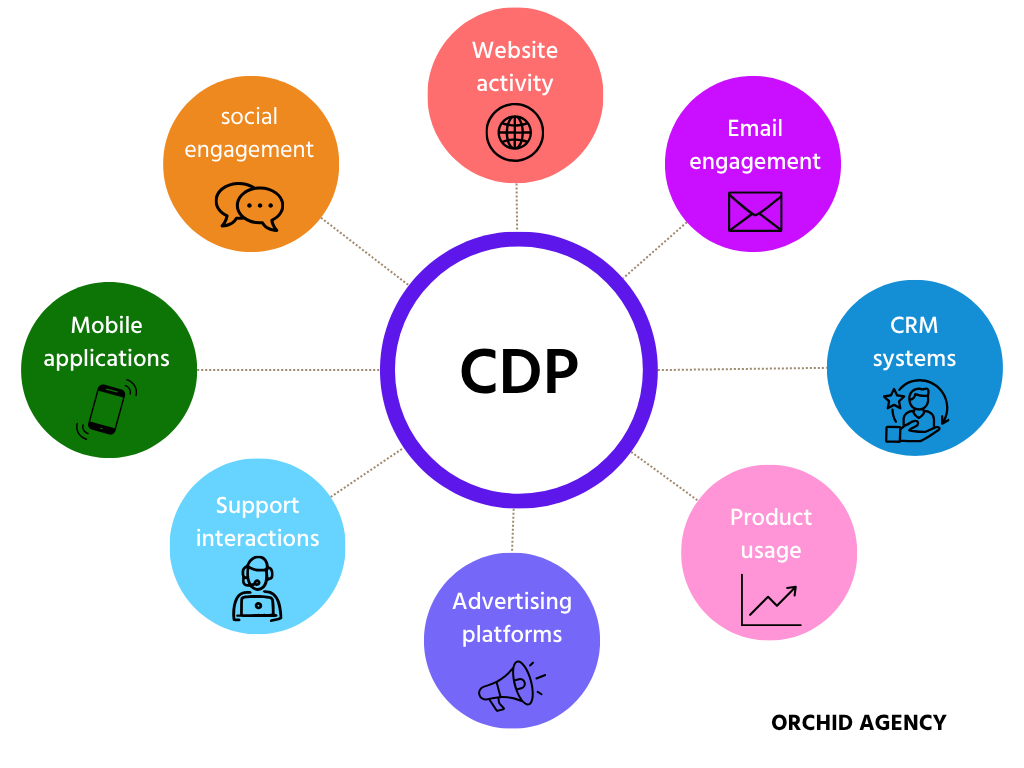
A Customer Data Platform (CDP) is a platform that collects customer data from multiple sources, connects that information into unified customer profiles, and makes it available across marketing, sales, and customer experience teams.
Instead of having customer information spread across separate systems, a CDP helps create a single view of each customer.
A CDP can collect information from:
- Website activity
- Email engagement
- CRM systems
- Product usage
- Advertising platforms
- Customer support interactions
- Mobile applications
- Offline interactions
For example, a prospect may:
- Visit your website
- Download an industry report
- Attend a webinar
- Open several emails
- Request a product demo
Without connected data, these interactions may appear separately. A CDP can connect these interactions to create a clear picture of the buyer journey.
Note: A CDP should not be confused with a Customer Relationship Manager (CRM), which helps you manage customer relationships.
In simple terms:
- CRM = Manages customer relationships
- CDP = Connects customer data
The Rise of AI-Powered Customer Data Strategies
Here are some ways AI-powered customer data strategies can help analyze and apply customer insights.
Improve Customer Segmentation
Instead of relying on basic attributes like industry or company size, you can use customer data to identify behavioral signals.
For example, you can create segments based on prospects who:
- Visit high-intent pages
- Download multiple resources
- Attend webinars
- Engage with specific campaigns
This helps teams deliver more relevant messaging based on where prospects are in the buying journey.
Personalize Marketing Campaigns
Connected customer data allows you to create more targeted experiences across channels.
Some examples:
- Sending content recommendations based on previous engagement
- Creating nurture campaigns based on buyer interests
- Personalizing website experiences for different audiences
Improve Marketing Attribution
A connected data strategy helps teams better understand what influences conversions.
Marketing teams can use customer insights to identify:
- Which channels generate qualified leads
- Which content supports pipeline growth
- Which campaigns influence customer decisions
Automate Repetitive Marketing Tasks
AI can help teams save time by automating processes like:
- Lead scoring
- Audience updates
- Campaign reporting
- Customer follow-ups
The goal isn’t to automate everything; it’s to use AI and customer data to spend more time on strategy and less time on the nitty-gritty.
As a Startup, Do You Need a CDP Right Now?
You probably don’t need to implement a CDP immediately. For early-stage startups, investing in a CDP before having a strong data foundation can create unnecessary complexity.
You do need to start with the basics:
- Clear positioning
- Defined ideal customer profile
- Strong CRM processes
- Accurate tracking
- Connected marketing tools
Here’s more on marketing startup strategy.
A CDP becomes more valuable when your company reaches a point where:
- Customer data exists across many platforms
- Marketing personalization becomes difficult
- Teams lack visibility into customer behavior
- Reporting requires significant manual work
- Multiple channels influence the buying journey
Popular Customer Data Platforms to Explore
But if you do find yourself ready to evaluate CDP solutions, here are some commonly used platforms:
- Twilio Segment: Segment helps companies collect, organize, and connect customer data across different tools. It is commonly used by companies that need to manage customer events across websites, apps, and marketing platforms.
- Salesforce Data Cloud: Salesforce Data Cloud connects customer data across Salesforce products and external sources. It can be useful for organizations already using Salesforce that want a more unified customer view.
- Adobe Real-Time CDP: Adobe Real-Time CDP is designed for organizations managing large amounts of customer data across multiple channels and looking to create personalized experiences.
- Tealium: Tealium provides customer data management tools focused on data collection, governance, and activation across marketing platforms.
Keep this in mind: The next generation of marketing teams won’t just collect customer data. They’ll use it to make faster decisions, create better experiences, and build stronger customer relationships.


