
How to Turn Paid Search Into a High-ROI Growth Channel


How to Turn Paid Search Into a High-ROI Growth Channel
Paid search strategies can help you reach buyers who are actively looking for a solution like yours. But generating clicks does not always guarantee qualified leads.
According to WordStream and LocaliQ's 2026 Google Ads benchmarks, the average cost per lead across search advertising campaigns was $66.69. For the business services category, it was $93.69. These figures show why tracking lead quality and revenue matters as much as tracking ad spend.
If you’ve decided to invest in paid search, here are five ways to get the most from your campaigns.
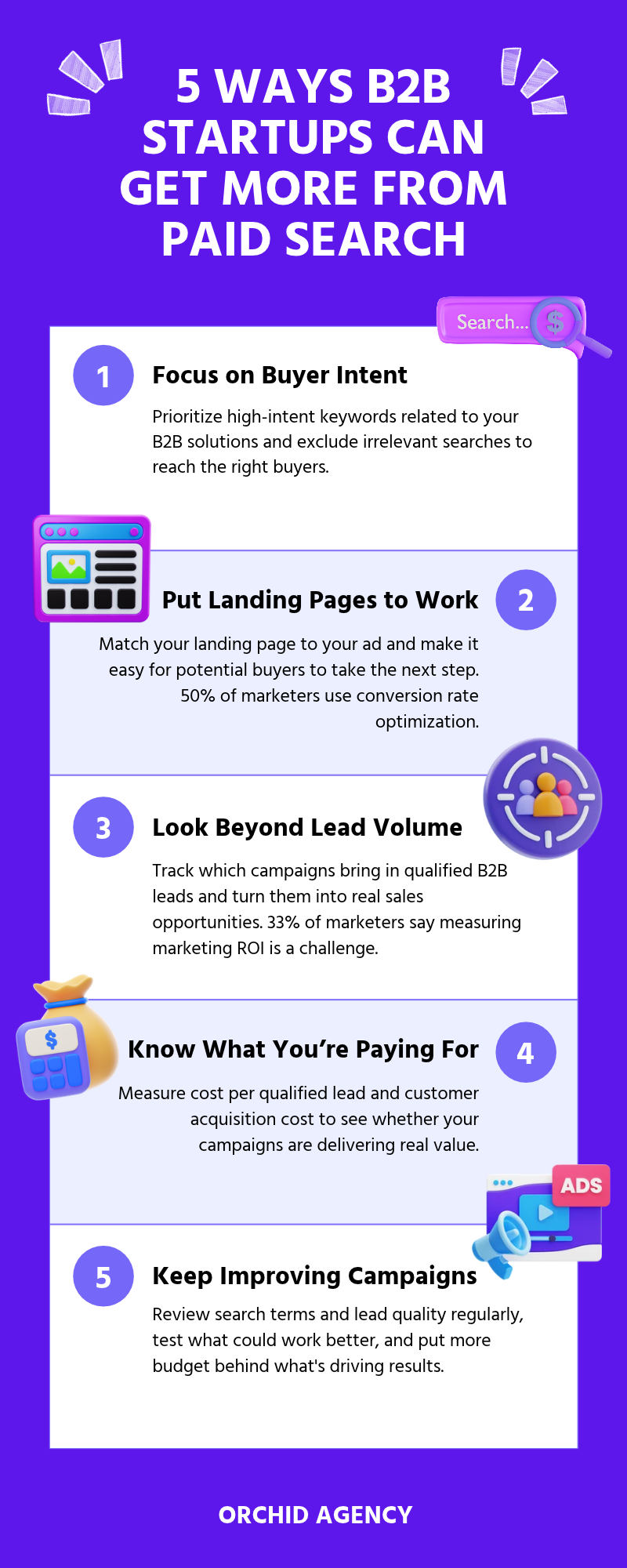
1. Focus on Keywords With Buying Intent
Great job if you have more search volume, but that doesn’t always equal better results. Broad keywords may attract people researching a topic, while specific searches can signal a need for a solution.
Try this:
- Prioritize keywords related to your services, customer pain points, and solutions.
- Separate high-intent searches from general research terms.
- Review your search terms report and exclude irrelevant queries with negative keywords.
The goal: Spend less on clicks that are unlikely to become qualified opportunities.
2. Make Every Landing Page Count
Your ad gets people to click, but your landing page needs to give them a reason to take the next step.
HubSpot's 2026 State of Marketing report finds that 50% of marketers use conversion rate optimization to improve performance.
Try this:
- Match your landing page headline to the promise in your ad.
- Use one clear call to action, such as booking a demo or requesting a consultation.
- Remove unnecessary form fields and distractions.
- Test different headlines, offers, and page layouts.
Start with the pages receiving the most paid traffic so your changes have the greatest potential impact.
3. Optimize for Qualified Leads, Not Clicks
Your campaign can generate a lot of leads without contributing to your pipeline. Avoid only measuring form submissions. This could reward campaigns that attract the wrong audience.
Try this:
- Track demo requests, qualified inquiries, and sales opportunities.
- Connect ad data to your CRM when possible.
- Compare which keywords and campaigns produce customers, not just leads.
- Review lead quality with your sales team.
HubSpot's 2026 marketing research found that 33% of marketers identified measuring marketing ROI as a challenge.
Connecting campaign activity to sales outcomes helps you make more informed budget decisions.
4. Know What a Good Cost Per Lead Looks Like
Benchmarks can give you a starting point, but they shouldn't dictate your budget.
WordStream and LocaliQ's 2026 study reported these search advertising averages:
- 6.64% click-through rate
- 8.18% conversion rate
- $66.69 cost per lead
However, these numbers do cover multiple industries, but are still good context for B2B startups. Your acceptable cost per lead depends on lead quality, sales conversion rates, and customer value.
What to do:
- Calculate your cost per qualified lead, not just cost per form submission.
- Track how many leads become customers.
- Compare acquisition costs against customer value and profit margins.
- Shift budget toward campaigns that generate profitable opportunities.
A cheaper lead isn't necessarily a better lead.
5. Review Performance and Make Changes Regularly
Paid search needs ongoing attention. Keyword relevance, conversion rates, and costs can change as campaigns run.
HubSpot's 2026 State of Marketing research found that 50% of marketers use conversion rate optimization, making it one of the most commonly used optimization techniques.
What to do:
- Review search terms, spend, and lead quality weekly.
- Identify campaigns with high costs or weak conversion rates.
- Test one meaningful change at a time.
- Increase budgets gradually when results support it.
Don't make major decisions based on a few clicks or a single slow week. The key is to look for patterns before changing course.
Turn Paid Search Into a Growth Channel
Paid search works best when targeting, landing pages, and measurement work together. Start with high-intent keywords, make it easy for prospects to convert, and connect campaign results to pipeline and revenue.
You don't necessarily need a bigger budget. You need a clearer picture of what's working, what's wasting spend, and where your next improvement should come from.


